Parts Experts
 Fast Shipping
 Aussie Owned
 Best Prices


















Why Buy From Us?
- Australian Owned
- 100% Fitment Guarantee
- Genuine Quality Brands

Shop now. Pay later. Pay in 4.
or 4 payments of $1,159.99 with Afterpay. More info


Enjoy Now, Pay Later

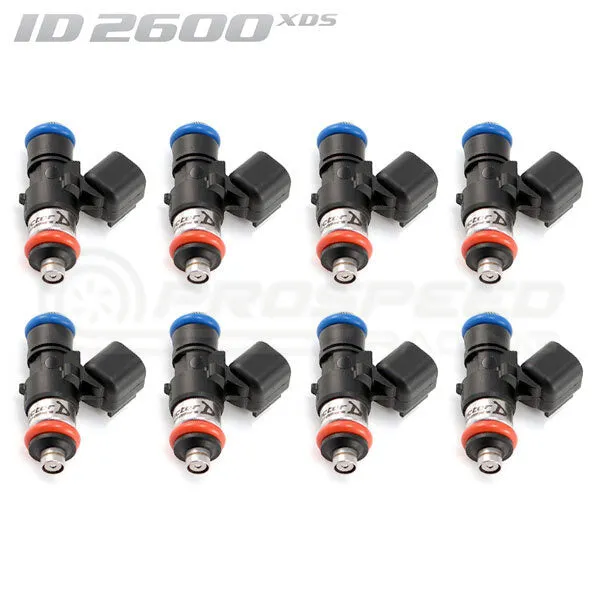
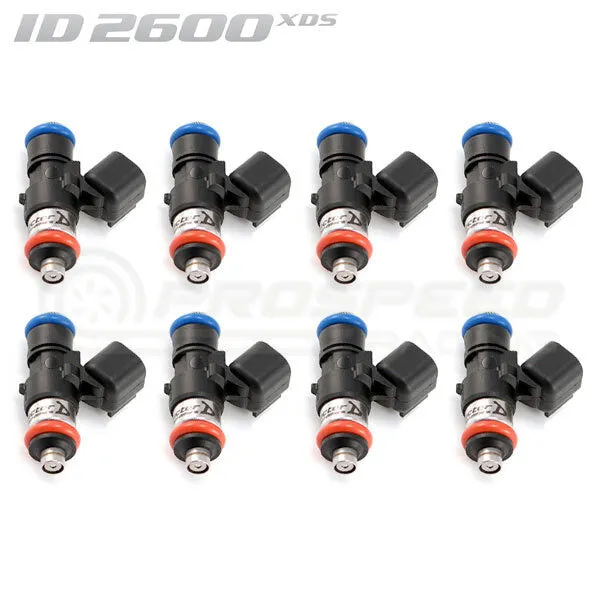
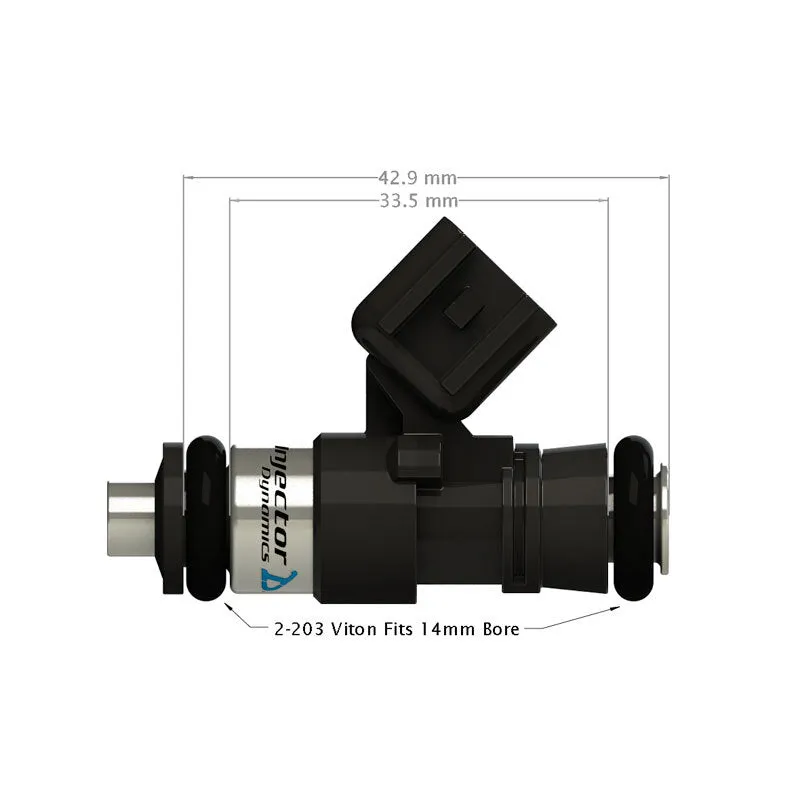
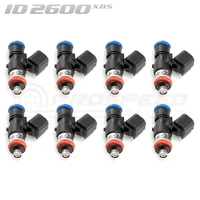
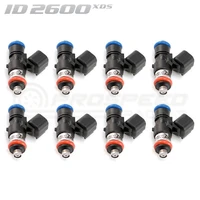
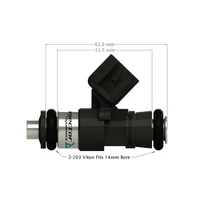
Injector Dynamics ID2600-XDS Direct Fit Injectors Set of 8
SKU: 2600.34.14.15.8
Can't Find What You're Looking For?
If you're looking for something in particular, we can help. Drop us a line using the button below.
Submit A RequestWhy Buy From Us?
- Australian Owned
- 100% Fitment Guarantee
- Genuine Quality Brands
Description
The ID2600-XDS is the most recent offering from the partnership of Injector Dynamics and Bosch Motorsport. The ID2600-XDS was developed specifically for use with liquid fuels. featuring corrosion resistant internals. and long term compatibility with ethanol and methanol. The ID2600-XDS has the highest flow rate of any injector offered by Bosch. and flows 50% more than the ID1700x.
The ID2600-XDS benefits from Dual Slope Matching. a method of matching the flow rate in both the linear. and nonlinear operating range. providing better cylinder to cylinder consistency at low pulse widths.
What is Dual Slope Matching?
Dual Slope Matching is a method of matching injectors that provides the best possible cylinder to cylinder fueling across the entire operating range.
Traditionally. injectors were matched based on static flow rate alone. which resulted in large deviations at low pulse widths.
Injector Dynamics introduced Slope Intercept Matching over a decade ago. which provided even cylinder to cylinder fueling across the linear operating range of the injector.
With the progression of turbo technology. and increased use of alcohol fuels. greater demands are placed on fuel injectors. and they are often required to deliver fuel well outside of their linear operating range.
The concept of Dual Slope Matching extends the injector matching into the lower non linear operating range. Dual Slope Matching was conceived by Aaron Looft of Injector Dynamics. who was inspired by the dual slope injector characterization model used by Ford.
How Does Dual Slope Matching Work?
Lets first consider static flow matching which was the industry standard prior to Injector Dynamics.
The graph below shows the dynamic response of two hypothetical 1500 cc/min injectors within their linear operating range. One with an offset (Dead time. latency. etc.) of 0.95 milliseconds. and one with an offset of 0.85 milliseconds.

The slope of both lines is the same. as they have the same flow rate. but the difference in offset results in the injector with the higher offset delivering 2.5 uL less fuel per injection event. At a pulse width of 19msec. which equals 90% duty cycle at 6.000 rpm. 2.5ul amounts to a mere 0.6% difference in flow between the two injectors. but at 2msec. that same 2.5ul difference amounts to a 9.5% difference!

Slope Intercept matching as introduced by Injector Dynamics in 2007 solved this problem by matching injectors based on flow rate (Slope) and offset (Intercept) providing even cylinder to cylinder fueling across the linear operating range.
Moving on to the non linear operating range. the graph below shows a pair of 1500cc injectors matched using the Injector Dynamics Slope Intercept method. Both injectors have the same flow rate and offset. but in the non linear range. the flow deviates from the straight line shown in the graph above. In this case. the flow rate. or slope of each injector in the non linear range is 1530cc/min and 1470cc/min representing a spread of +/- 2%.
As the graph clearly shows. the difference between the two injectors increases as pulse width decreases.

Shown as percent difference in flow. we see that even though the injectors are matched perfectly in the linear operating range. the difference in slope in the non linear range results in a flow mismatch that is magnified as the pulse-width decreases. becoming substantial at the very lowest pulse widths.

How Well Does This Work in Practice?
Moving from hypothetical injectors to a real world application. the response in the non linear range is considerably less orderly than shown in the graphs above. and is quantified using a technique called Least Squares Linear Regression ? Which is a fancy way of saying straight line approximation.
By approximating the response in the non linear range. and matching sets accordingly. the best possible cylinder to cylinder fueling is realized across the entire operating range.
Using the ID2600-XDS as an example. the traditional Slope Intercept method of matching results in an average deviation of +/-5.1% in the non linear range. while the new method of Dual Slope Matching has reduced this to +/-1.4%
In a perfect world. this deviation would not exist at all. but for those of us who live (And tune!) in the real world. Dual Slope Matching represents a large step forward. and we are proud to offer it to the market.
Specifications
- Nominal Flow Rate: 2600cc/min @ 3.0 Bar (43.5 psi)
- Maximum Differential Fuel Pressure: 9.0 Bar (130.5 psi) Ð Requires Minimum 11volt.
- Fuel Compatibility: Compatible with Methanol/Ethanol/All Known Hydrocarbons. NOT Compatible with Ethers (MTBE. ETBE. TAME) or Nitro Methane
- Electrical Connector: USCAR
Compatibility
- 2009 Chevrolet Avalanche, LTZ - L76 6.0L Aspirated Petrol 4WD, Gen 2 (4D Ute)
- 2010 - 2015 Chevrolet Camaro, SS - L99 6.2L Aspirated Petrol RWD (302kW), G5 (2D Coupe)
- 2010 - 2015 Chevrolet Camaro, SS - LS3 6.2L Aspirated Petrol RWD (321kW), G5 (2D Coupe)
- 2014 Chevrolet Camaro, SS - LS7 7.0L Aspirated Petrol RWD (377kW), G5 (2D Coupe)
- 2015 Chevrolet Camaro, Z28 - LS7 7.0L Aspirated Petrol RWD (377kW), G5 (2D Coupe)
- 2012 - 2015 Chevrolet Camaro, ZL1 - LSA 6.2L Supercharged Petrol RWD (432kW), G5 (2D Coupe)
- 2008 - 2010 Chevrolet Corvette, Base - LS3 6.2L Aspirated Petrol RWD (321kW), C6 (2D Convertible)
- 2010 - 2012 Chevrolet Corvette, Grand Sport - LS3 6.2L Aspirated Petrol RWD (321kW), C6 (2D Convertible)
- 2010 - 2013 Chevrolet Corvette, LT Grand Sport - LS3 6.2L Aspirated Petrol RWD (321kW), C6 (2D Convertible)
- 2008 - 2010 Chevrolet Corvette, Base - LS3 6.2L Aspirated Petrol RWD (321kW), C6 (2D Coupe)
- 2010 - 2012 Chevrolet Corvette, Grand Sport - LS3 6.2L Aspirated Petrol RWD (321kW), C6 (2D Coupe)
- 2010 - 2013 Chevrolet Corvette, LT Grand Sport - LS3 6.2L Aspirated Petrol RWD (321kW), C6 (2D Coupe)
- 2006 - 2009 Chevrolet Corvette, Z06 - LS7 7.0L Aspirated Petrol RWD (377kW), C6 (2D Coupe)
- 2010 - 2012 Chevrolet Corvette, Z06 Custom - LS7 7.0L Aspirated Petrol RWD (377kW), C6 (2D Coupe)
- 2010 - 2012 Chevrolet Corvette, Z06 Premium - LS7 7.0L Aspirated Petrol RWD (377kW), C6 (2D Coupe)
- 2009 - 2012 Chevrolet Corvette, ZR1 - LS9 6.2L Supercharged Petrol RWD (476kW), C6 (2D Coupe)
- 2008 - 2009 Chevrolet Silverado, Base - L76 6.0L Aspirated Petrol 4WD, 1500 (4D Ute)
- 2008 - 2010 Holden Berlina, Base - L76 6.0L Aspirated Petrol RWD (260kW), VE (4D Sedan)
- 2006 Holden Berlina, Base - L76 6.0L Aspirated Petrol RWD (260kW), VZ (4D Sedan)
- 2008 - 2010 Holden Calais, Base - L76 6.0L Aspirated Petrol RWD (260kW), VE (4D Sedan)
- 2008 - 2010 Holden Calais, Base - L76 6.0L Aspirated Petrol RWD (260kW), VE (4D Wagon)
- 2015 - 2017 Holden Calais, V - LS3 6.2L Aspirated Petrol RWD (304kW), VF (4D Sedan)
- 2015 - 2017 Holden Calais, V - LS3 6.2L Aspirated Petrol RWD (304kW), VF (4D Wagon)
- 2006 Holden Calais, Base - L76 6.0L Aspirated Petrol RWD (260kW), VZ (4D Sedan)
- 2006 Holden Caprice, Base - L76 6.0L Aspirated Petrol RWD (260kW), WL (4D Sedan)
- 2008 - 2010 Holden Caprice, Base - L76 6.0L Aspirated Petrol RWD (260kW), WM (4D Sedan)
- 2015 - 2017 Holden Caprice, Base - LS3 6.2L Aspirated Petrol RWD (304kW), WN (4D Sedan)
- 2008 - 2010 Holden Commodore, SS - L76 6.0L Aspirated Petrol RWD (260kW), VE (2D Ute)
- 2008 - 2010 Holden Commodore, SS-V - L76 6.0L Aspirated Petrol RWD (260kW), VE (2D Ute)
- 2008 - 2010 Holden Commodore, Berlina - L76 6.0L Aspirated Petrol RWD (260kW), VE (4D Sedan)
- 2008 - 2010 Holden Commodore, SS - L76 6.0L Aspirated Petrol RWD (260kW), VE (4D Sedan)
- 2008 - 2010 Holden Commodore, SS-V - L76 6.0L Aspirated Petrol RWD (260kW), VE (4D Sedan)
- 2008 - 2010 Holden Commodore, SS - L76 6.0L Aspirated Petrol RWD (260kW), VE (4D Wagon)
- 2008 - 2010 Holden Commodore, SS-V Sportwagon - L76 6.0L Aspirated Petrol RWD (260kW), VE (4D Wagon)
- 2015 - 2017 Holden Commodore, SS - LS3 6.2L Aspirated Petrol RWD (304kW), VF (2D Ute)
- 2015 - 2017 Holden Commodore, SS-V - LS3 6.2L Aspirated Petrol RWD (304kW), VF (2D Ute)
- 2015 - 2017 Holden Commodore, SS - LS3 6.2L Aspirated Petrol RWD (304kW), VF (4D Sedan)
- 2015 - 2017 Holden Commodore, SS-V - LS3 6.2L Aspirated Petrol RWD (304kW), VF (4D Sedan)
- 2015 - 2017 Holden Commodore, SS Sportwagon - LS3 6.2L Aspirated Petrol RWD (304kW), VF (4D Wagon)
- 2015 - 2017 Holden Commodore, SS-V Sportwagon - LS3 6.2L Aspirated Petrol RWD (304kW), VF (4D Wagon)
- 2005 - 2006 Holden Commodore, SS - L76 6.0L Aspirated Petrol RWD (260kW), VZ (2D Ute)
- 2005 - 2006 Holden Commodore, SS Thunder - L76 6.0L Aspirated Petrol RWD (260kW), VZ (2D Ute)
- 2006 Holden Commodore, Berlina - L76 6.0L Aspirated Petrol RWD (260kW), VZ (4D Sedan)
- 2006 Holden Commodore, SS - L76 6.0L Aspirated Petrol RWD (260kW), VZ (4D Sedan)
- 2006 Holden Commodore, SV8 - L76 6.0L Aspirated Petrol RWD (260kW), VZ (4D Sedan)
- 2004 - 2005 Holden Commodore, Base - L76 6.0L Aspirated Petrol RWD (260kW), VZ (4D Wagon)
- 2006 Holden Crewman, Cross 8 - L76 6.0L Aspirated Petrol AWD (260kW), VZ (4D Ute)
- 2006 Holden Crewman, SS - L76 6.0L Aspirated Petrol RWD (260kW), VZ (4D Ute)
- 2006 Holden Crewman, SS Thunder - L76 6.0L Aspirated Petrol RWD (260kW), VZ (4D Ute)
- 2006 Holden Statesman, Base - L76 6.0L Aspirated Petrol RWD (260kW), WL (4D Sedan)
- 2008 - 2010 Holden Statesman, Base - L76 6.0L Aspirated Petrol RWD (260kW), WM (4D Sedan)
- 2012 - 2013 HSV Clubsport, Base - LS3 6.2L Aspirated Petrol RWD (317kW), VE (4D Sedan)
- 2010 - 2011 HSV Clubsport, GXP - LS3 6.2L Aspirated Petrol RWD (317kW), VE (4D Sedan)
- 2008 - 2010 HSV Clubsport, R8 - LS3 6.2L Aspirated Petrol RWD (317kW), VE (4D Sedan)
- 2011 - 2013 HSV Clubsport, R8 - LS3 6.2L Aspirated Petrol RWD (325kW), VE (4D Sedan)
- 2009 - 2011 HSV Clubsport, R8 Tourer - LS3 6.2L Aspirated Petrol RWD (317kW), VE (4D Wagon)
- 2012 - 2013 HSV Clubsport, R8 Tourer - LS3 6.2L Aspirated Petrol RWD (325kW), VE (4D Wagon)
- 2013 - 2014 HSV Clubsport, Base - LS3 6.2L Aspirated Petrol RWD (317kW), VF (4D Sedan)
- 2014 - 2017 HSV Clubsport, Base - LS3 6.2L Aspirated Petrol RWD (325kW), VF (4D Sedan)
- 2013 - 2015 HSV Clubsport, R8 - LS3 6.2L Aspirated Petrol RWD (325kW), VF (4D Sedan)
- 2016 - 2017 HSV Clubsport, R8 - LS3 6.2L Aspirated Petrol RWD (340kW), VF (4D Sedan)
- 2015 - 2017 HSV Clubsport, R8 LSA - LSA 6.2L Supercharged Petrol RWD (400kW), VF (4D Sedan)
- 2017 HSV Clubsport, R8 LSA 30th Anniversary - LSA 6.2L Supercharged Petrol RWD (410kW), VF (4D Sedan)
- 2013 - 2015 HSV Clubsport, R8 Tourer - LS3 6.2L Aspirated Petrol RWD (325kW), VF (4D Wagon)
- 2015 - 2017 HSV Clubsport, R8 Tourer LSA - LSA 6.2L Supercharged Petrol RWD (400kW), VF (4D Wagon)
- 2017 HSV Clubsport, R8 Tourer LSA 30th Anniversary - LSA 6.2L Supercharged Petrol RWD (410kW), VF (4D Wagon)
- 2008 - 2010 HSV Grange, Base - LS3 6.2L Aspirated Petrol RWD (317kW), WM (4D Sedan)
- 2010 - 2013 HSV Grange, Base - LS3 6.2L Aspirated Petrol RWD (325kW), WM (4D Sedan)
- 2013 - 2017 HSV Grange, Base - LS3 6.2L Aspirated Petrol RWD (340kW), WN (4D Sedan)
- 2008 - 2013 HSV GTS, Base - LS3 6.2L Aspirated Petrol RWD (325kW), VE (4D Sedan)
- 2017 HSV GTS, 30th Anniversary - LSA 6.2L Supercharged Petrol RWD (410kW), VF (4D Sedan)
- 2013 - 2017 HSV GTS, Base - LSA 6.2L Supercharged Petrol RWD (430kW), VF (4D Sedan)
- 2017 HSV GTS, R - LSA 6.2L Supercharged Petrol RWD (435kW), VF (4D Sedan)
- 2017 HSV GTS, R W1 - LS9 6.2L Supercharged Petrol RWD (474kW), VF (4D Sedan)
- 2012 - 2013 HSV Maloo, Base - LS3 6.2L Aspirated Petrol RWD (317kW), VE (2D Ute)
- 2010 - 2011 HSV Maloo, GXP - LS3 6.2L Aspirated Petrol RWD (317kW), VE (2D Ute)
- 2008 - 2013 HSV Maloo, R8 - LS3 6.2L Aspirated Petrol RWD (317kW), VE (2D Ute)
- 2013 HSV Maloo, Base - LS3 6.2L Aspirated Petrol RWD (317kW), VF (2D Ute)
- 2014 - 2015 HSV Maloo, Base - LS3 6.2L Aspirated Petrol RWD (325kW), VF (2D Ute)
- 2014 - 2015 HSV Maloo, GTS - LSA 6.2L Supercharged Petrol RWD (430kW), VF (2D Ute)
- 2017 HSV Maloo, GTSR - LSA 6.2L Supercharged Petrol RWD (435kW), VF (2D Ute)
- 2013 - 2015 HSV Maloo, R8 - LS3 6.2L Aspirated Petrol RWD (325kW), VF (2D Ute)
- 2015 - 2017 HSV Maloo, R8 - LSA 6.2L Supercharged Petrol RWD (400kW), VF (2D Ute)
- 2017 HSV Maloo, R8 - LSA 6.2L Supercharged Petrol RWD (410kW), VF (2D Ute)
- 2016 - 2017 HSV Maloo, R8 SV Black - LS3 6.2L Aspirated Petrol RWD (340kW), VF (2D Ute)
- 2008 - 2013 HSV Senator, Signature - LS3 6.2L Aspirated Petrol RWD (317kW), VE (4D Sedan)
- 2013 - 2015 HSV Senator, Signature - LS3 6.2L Aspirated Petrol RWD (340kW), VF (4D Sedan)
- 2015 - 2017 HSV Senator, Signature - LSA 6.2L Supercharged Petrol RWD (400kW), VF (4D Sedan)
- 2017 HSV Senator, Signature 30th Anniversary - LSA 6.2L Supercharged Petrol RWD (410kW), VF (4D Sedan)
- 2008 - 2009 HSV W427, Base - LS7 7.0L Aspirated Petrol RWD (375kW), VE (4D Sedan)
- 2007 - 2009 Hummer H2, Base - L92 6.2L Aspirated Petrol 4WD (301kW), (4D SUV Full-Size)
- 2008 Hummer H2, Base - L92 6.2L Aspirated Petrol 4WD (301kW), (4D Ute)
The ID2600-XDS is the most recent offering from the partnership of Injector Dynamics and Bosch Motorsport. The ID2600-XDS was developed specifically for use with liquid fuels. featuring corrosion resistant internals. and long term compatibility with ethanol and methanol. The ID2600-XDS has the highest flow rate of any injector offered by Bosch. and flows 50% more than the ID1700x.
The ID2600-XDS benefits from Dual Slope Matching. a method of matching the flow rate in both the linear. and nonlinear operating range. providing better cylinder to cylinder consistency at low pulse widths.
What is Dual Slope Matching?
Dual Slope Matching is a method of matching injectors that provides the best possible cylinder to cylinder fueling across the entire operating range.
Traditionally. injectors were matched based on static flow rate alone. which resulted in large deviations at low pulse widths.
Injector Dynamics introduced Slope Intercept Matching over a decade ago. which provided even cylinder to cylinder fueling across the linear operating range of the injector.
With the progression of turbo technology. and increased use of alcohol fuels. greater demands are placed on fuel injectors. and they are often required to deliver fuel well outside of their linear operating range.
The concept of Dual Slope Matching extends the injector matching into the lower non linear operating range. Dual Slope Matching was conceived by Aaron Looft of Injector Dynamics. who was inspired by the dual slope injector characterization model used by Ford.
How Does Dual Slope Matching Work?
Lets first consider static flow matching which was the industry standard prior to Injector Dynamics.
The graph below shows the dynamic response of two hypothetical 1500 cc/min injectors within their linear operating range. One with an offset (Dead time. latency. etc.) of 0.95 milliseconds. and one with an offset of 0.85 milliseconds.
The slope of both lines is the same. as they have the same flow rate. but the difference in offset results in the injector with the higher offset delivering 2.5 uL less fuel per injection event. At a pulse width of 19msec. which equals 90% duty cycle at 6.000 rpm. 2.5ul amounts to a mere 0.6% difference in flow between the two injectors. but at 2msec. that same 2.5ul difference amounts to a 9.5% difference!
Slope Intercept matching as introduced by Injector Dynamics in 2007 solved this problem by matching injectors based on flow rate (Slope) and offset (Intercept) providing even cylinder to cylinder fueling across the linear operating range.
Moving on to the non linear operating range. the graph below shows a pair of 1500cc injectors matched using the Injector Dynamics Slope Intercept method. Both injectors have the same flow rate and offset. but in the non linear range. the flow deviates from the straight line shown in the graph above. In this case. the flow rate. or slope of each injector in the non linear range is 1530cc/min and 1470cc/min representing a spread of +/- 2%.
As the graph clearly shows. the difference between the two injectors increases as pulse width decreases.
Shown as percent difference in flow. we see that even though the injectors are matched perfectly in the linear operating range. the difference in slope in the non linear range results in a flow mismatch that is magnified as the pulse-width decreases. becoming substantial at the very lowest pulse widths.
How Well Does This Work in Practice?
Moving from hypothetical injectors to a real world application. the response in the non linear range is considerably less orderly than shown in the graphs above. and is quantified using a technique called Least Squares Linear Regression ? Which is a fancy way of saying straight line approximation.
By approximating the response in the non linear range. and matching sets accordingly. the best possible cylinder to cylinder fueling is realized across the entire operating range.
Using the ID2600-XDS as an example. the traditional Slope Intercept method of matching results in an average deviation of +/-5.1% in the non linear range. while the new method of Dual Slope Matching has reduced this to +/-1.4%
In a perfect world. this deviation would not exist at all. but for those of us who live (And tune!) in the real world. Dual Slope Matching represents a large step forward. and we are proud to offer it to the market.
- Nominal Flow Rate: 2600cc/min @ 3.0 Bar (43.5 psi)
- Maximum Differential Fuel Pressure: 9.0 Bar (130.5 psi) Ð Requires Minimum 11volt.
- Fuel Compatibility: Compatible with Methanol/Ethanol/All Known Hydrocarbons. NOT Compatible with Ethers (MTBE. ETBE. TAME) or Nitro Methane
- Electrical Connector: USCAR
- 2009 Chevrolet Avalanche, LTZ - L76 6.0L Aspirated Petrol 4WD, Gen 2 (4D Ute)
- 2010 - 2015 Chevrolet Camaro, SS - L99 6.2L Aspirated Petrol RWD (302kW), G5 (2D Coupe)
- 2010 - 2015 Chevrolet Camaro, SS - LS3 6.2L Aspirated Petrol RWD (321kW), G5 (2D Coupe)
- 2014 Chevrolet Camaro, SS - LS7 7.0L Aspirated Petrol RWD (377kW), G5 (2D Coupe)
- 2015 Chevrolet Camaro, Z28 - LS7 7.0L Aspirated Petrol RWD (377kW), G5 (2D Coupe)
- 2012 - 2015 Chevrolet Camaro, ZL1 - LSA 6.2L Supercharged Petrol RWD (432kW), G5 (2D Coupe)
- 2008 - 2010 Chevrolet Corvette, Base - LS3 6.2L Aspirated Petrol RWD (321kW), C6 (2D Convertible)
- 2010 - 2012 Chevrolet Corvette, Grand Sport - LS3 6.2L Aspirated Petrol RWD (321kW), C6 (2D Convertible)
- 2010 - 2013 Chevrolet Corvette, LT Grand Sport - LS3 6.2L Aspirated Petrol RWD (321kW), C6 (2D Convertible)
- 2008 - 2010 Chevrolet Corvette, Base - LS3 6.2L Aspirated Petrol RWD (321kW), C6 (2D Coupe)
- 2010 - 2012 Chevrolet Corvette, Grand Sport - LS3 6.2L Aspirated Petrol RWD (321kW), C6 (2D Coupe)
- 2010 - 2013 Chevrolet Corvette, LT Grand Sport - LS3 6.2L Aspirated Petrol RWD (321kW), C6 (2D Coupe)
- 2006 - 2009 Chevrolet Corvette, Z06 - LS7 7.0L Aspirated Petrol RWD (377kW), C6 (2D Coupe)
- 2010 - 2012 Chevrolet Corvette, Z06 Custom - LS7 7.0L Aspirated Petrol RWD (377kW), C6 (2D Coupe)
- 2010 - 2012 Chevrolet Corvette, Z06 Premium - LS7 7.0L Aspirated Petrol RWD (377kW), C6 (2D Coupe)
- 2009 - 2012 Chevrolet Corvette, ZR1 - LS9 6.2L Supercharged Petrol RWD (476kW), C6 (2D Coupe)
- 2008 - 2009 Chevrolet Silverado, Base - L76 6.0L Aspirated Petrol 4WD, 1500 (4D Ute)
- 2008 - 2010 Holden Berlina, Base - L76 6.0L Aspirated Petrol RWD (260kW), VE (4D Sedan)
- 2006 Holden Berlina, Base - L76 6.0L Aspirated Petrol RWD (260kW), VZ (4D Sedan)
- 2008 - 2010 Holden Calais, Base - L76 6.0L Aspirated Petrol RWD (260kW), VE (4D Sedan)
- 2008 - 2010 Holden Calais, Base - L76 6.0L Aspirated Petrol RWD (260kW), VE (4D Wagon)
- 2015 - 2017 Holden Calais, V - LS3 6.2L Aspirated Petrol RWD (304kW), VF (4D Sedan)
- 2015 - 2017 Holden Calais, V - LS3 6.2L Aspirated Petrol RWD (304kW), VF (4D Wagon)
- 2006 Holden Calais, Base - L76 6.0L Aspirated Petrol RWD (260kW), VZ (4D Sedan)
- 2006 Holden Caprice, Base - L76 6.0L Aspirated Petrol RWD (260kW), WL (4D Sedan)
- 2008 - 2010 Holden Caprice, Base - L76 6.0L Aspirated Petrol RWD (260kW), WM (4D Sedan)
- 2015 - 2017 Holden Caprice, Base - LS3 6.2L Aspirated Petrol RWD (304kW), WN (4D Sedan)
- 2008 - 2010 Holden Commodore, SS - L76 6.0L Aspirated Petrol RWD (260kW), VE (2D Ute)
- 2008 - 2010 Holden Commodore, SS-V - L76 6.0L Aspirated Petrol RWD (260kW), VE (2D Ute)
- 2008 - 2010 Holden Commodore, Berlina - L76 6.0L Aspirated Petrol RWD (260kW), VE (4D Sedan)
- 2008 - 2010 Holden Commodore, SS - L76 6.0L Aspirated Petrol RWD (260kW), VE (4D Sedan)
- 2008 - 2010 Holden Commodore, SS-V - L76 6.0L Aspirated Petrol RWD (260kW), VE (4D Sedan)
- 2008 - 2010 Holden Commodore, SS - L76 6.0L Aspirated Petrol RWD (260kW), VE (4D Wagon)
- 2008 - 2010 Holden Commodore, SS-V Sportwagon - L76 6.0L Aspirated Petrol RWD (260kW), VE (4D Wagon)
- 2015 - 2017 Holden Commodore, SS - LS3 6.2L Aspirated Petrol RWD (304kW), VF (2D Ute)
- 2015 - 2017 Holden Commodore, SS-V - LS3 6.2L Aspirated Petrol RWD (304kW), VF (2D Ute)
- 2015 - 2017 Holden Commodore, SS - LS3 6.2L Aspirated Petrol RWD (304kW), VF (4D Sedan)
- 2015 - 2017 Holden Commodore, SS-V - LS3 6.2L Aspirated Petrol RWD (304kW), VF (4D Sedan)
- 2015 - 2017 Holden Commodore, SS Sportwagon - LS3 6.2L Aspirated Petrol RWD (304kW), VF (4D Wagon)
- 2015 - 2017 Holden Commodore, SS-V Sportwagon - LS3 6.2L Aspirated Petrol RWD (304kW), VF (4D Wagon)
- 2005 - 2006 Holden Commodore, SS - L76 6.0L Aspirated Petrol RWD (260kW), VZ (2D Ute)
- 2005 - 2006 Holden Commodore, SS Thunder - L76 6.0L Aspirated Petrol RWD (260kW), VZ (2D Ute)
- 2006 Holden Commodore, Berlina - L76 6.0L Aspirated Petrol RWD (260kW), VZ (4D Sedan)
- 2006 Holden Commodore, SS - L76 6.0L Aspirated Petrol RWD (260kW), VZ (4D Sedan)
- 2006 Holden Commodore, SV8 - L76 6.0L Aspirated Petrol RWD (260kW), VZ (4D Sedan)
- 2004 - 2005 Holden Commodore, Base - L76 6.0L Aspirated Petrol RWD (260kW), VZ (4D Wagon)
- 2006 Holden Crewman, Cross 8 - L76 6.0L Aspirated Petrol AWD (260kW), VZ (4D Ute)
- 2006 Holden Crewman, SS - L76 6.0L Aspirated Petrol RWD (260kW), VZ (4D Ute)
- 2006 Holden Crewman, SS Thunder - L76 6.0L Aspirated Petrol RWD (260kW), VZ (4D Ute)
- 2006 Holden Statesman, Base - L76 6.0L Aspirated Petrol RWD (260kW), WL (4D Sedan)
- 2008 - 2010 Holden Statesman, Base - L76 6.0L Aspirated Petrol RWD (260kW), WM (4D Sedan)
- 2012 - 2013 HSV Clubsport, Base - LS3 6.2L Aspirated Petrol RWD (317kW), VE (4D Sedan)
- 2010 - 2011 HSV Clubsport, GXP - LS3 6.2L Aspirated Petrol RWD (317kW), VE (4D Sedan)
- 2008 - 2010 HSV Clubsport, R8 - LS3 6.2L Aspirated Petrol RWD (317kW), VE (4D Sedan)
- 2011 - 2013 HSV Clubsport, R8 - LS3 6.2L Aspirated Petrol RWD (325kW), VE (4D Sedan)
- 2009 - 2011 HSV Clubsport, R8 Tourer - LS3 6.2L Aspirated Petrol RWD (317kW), VE (4D Wagon)
- 2012 - 2013 HSV Clubsport, R8 Tourer - LS3 6.2L Aspirated Petrol RWD (325kW), VE (4D Wagon)
- 2013 - 2014 HSV Clubsport, Base - LS3 6.2L Aspirated Petrol RWD (317kW), VF (4D Sedan)
- 2014 - 2017 HSV Clubsport, Base - LS3 6.2L Aspirated Petrol RWD (325kW), VF (4D Sedan)
- 2013 - 2015 HSV Clubsport, R8 - LS3 6.2L Aspirated Petrol RWD (325kW), VF (4D Sedan)
- 2016 - 2017 HSV Clubsport, R8 - LS3 6.2L Aspirated Petrol RWD (340kW), VF (4D Sedan)
- 2015 - 2017 HSV Clubsport, R8 LSA - LSA 6.2L Supercharged Petrol RWD (400kW), VF (4D Sedan)
- 2017 HSV Clubsport, R8 LSA 30th Anniversary - LSA 6.2L Supercharged Petrol RWD (410kW), VF (4D Sedan)
- 2013 - 2015 HSV Clubsport, R8 Tourer - LS3 6.2L Aspirated Petrol RWD (325kW), VF (4D Wagon)
- 2015 - 2017 HSV Clubsport, R8 Tourer LSA - LSA 6.2L Supercharged Petrol RWD (400kW), VF (4D Wagon)
- 2017 HSV Clubsport, R8 Tourer LSA 30th Anniversary - LSA 6.2L Supercharged Petrol RWD (410kW), VF (4D Wagon)
- 2008 - 2010 HSV Grange, Base - LS3 6.2L Aspirated Petrol RWD (317kW), WM (4D Sedan)
- 2010 - 2013 HSV Grange, Base - LS3 6.2L Aspirated Petrol RWD (325kW), WM (4D Sedan)
- 2013 - 2017 HSV Grange, Base - LS3 6.2L Aspirated Petrol RWD (340kW), WN (4D Sedan)
- 2008 - 2013 HSV GTS, Base - LS3 6.2L Aspirated Petrol RWD (325kW), VE (4D Sedan)
- 2017 HSV GTS, 30th Anniversary - LSA 6.2L Supercharged Petrol RWD (410kW), VF (4D Sedan)
- 2013 - 2017 HSV GTS, Base - LSA 6.2L Supercharged Petrol RWD (430kW), VF (4D Sedan)
- 2017 HSV GTS, R - LSA 6.2L Supercharged Petrol RWD (435kW), VF (4D Sedan)
- 2017 HSV GTS, R W1 - LS9 6.2L Supercharged Petrol RWD (474kW), VF (4D Sedan)
- 2012 - 2013 HSV Maloo, Base - LS3 6.2L Aspirated Petrol RWD (317kW), VE (2D Ute)
- 2010 - 2011 HSV Maloo, GXP - LS3 6.2L Aspirated Petrol RWD (317kW), VE (2D Ute)
- 2008 - 2013 HSV Maloo, R8 - LS3 6.2L Aspirated Petrol RWD (317kW), VE (2D Ute)
- 2013 HSV Maloo, Base - LS3 6.2L Aspirated Petrol RWD (317kW), VF (2D Ute)
- 2014 - 2015 HSV Maloo, Base - LS3 6.2L Aspirated Petrol RWD (325kW), VF (2D Ute)
- 2014 - 2015 HSV Maloo, GTS - LSA 6.2L Supercharged Petrol RWD (430kW), VF (2D Ute)
- 2017 HSV Maloo, GTSR - LSA 6.2L Supercharged Petrol RWD (435kW), VF (2D Ute)
- 2013 - 2015 HSV Maloo, R8 - LS3 6.2L Aspirated Petrol RWD (325kW), VF (2D Ute)
- 2015 - 2017 HSV Maloo, R8 - LSA 6.2L Supercharged Petrol RWD (400kW), VF (2D Ute)
- 2017 HSV Maloo, R8 - LSA 6.2L Supercharged Petrol RWD (410kW), VF (2D Ute)
- 2016 - 2017 HSV Maloo, R8 SV Black - LS3 6.2L Aspirated Petrol RWD (340kW), VF (2D Ute)
- 2008 - 2013 HSV Senator, Signature - LS3 6.2L Aspirated Petrol RWD (317kW), VE (4D Sedan)
- 2013 - 2015 HSV Senator, Signature - LS3 6.2L Aspirated Petrol RWD (340kW), VF (4D Sedan)
- 2015 - 2017 HSV Senator, Signature - LSA 6.2L Supercharged Petrol RWD (400kW), VF (4D Sedan)
- 2017 HSV Senator, Signature 30th Anniversary - LSA 6.2L Supercharged Petrol RWD (410kW), VF (4D Sedan)
- 2008 - 2009 HSV W427, Base - LS7 7.0L Aspirated Petrol RWD (375kW), VE (4D Sedan)
- 2007 - 2009 Hummer H2, Base - L92 6.2L Aspirated Petrol 4WD (301kW), (4D SUV Full-Size)
- 2008 Hummer H2, Base - L92 6.2L Aspirated Petrol 4WD (301kW), (4D Ute)
Best Sellers

SKU: RWF-201

Teflon Hose Fitting AN Straight
$16.96
$19.49